


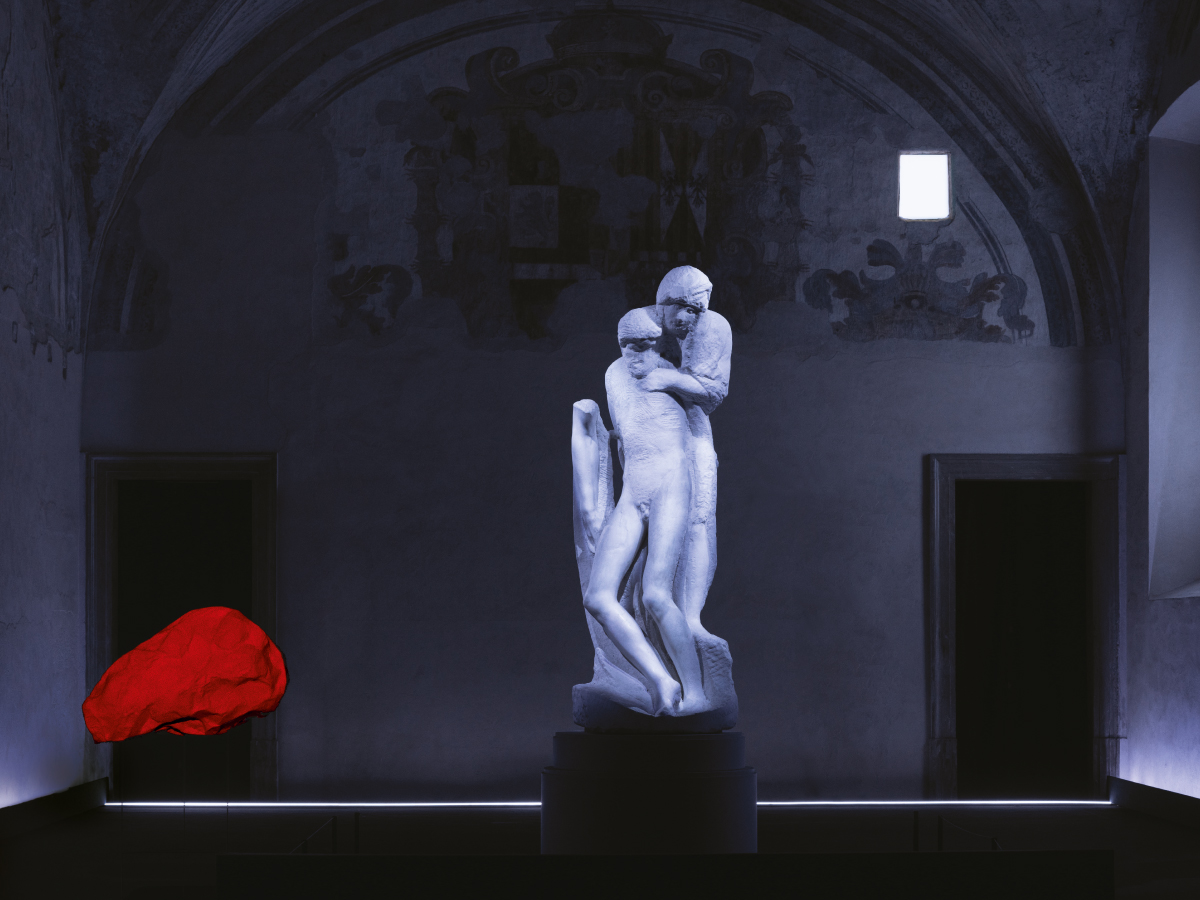
With Mother, the Texan director and playwright places Michelangelo’s final masterpiece at the heart of a visual and sonic work inside the Sforza Castle.
An icon of Milanese art—alongside The Last Supper—and one of the highest achievements in marble sculpture, the Rondanini Pietà is more relevant than ever. Mother opens a dialogue across the centuries, connecting contemporary design from the Salone del Mobile (the commissioning body of the work) with a cornerstone of Renaissance art. Robert Wilson, described by the New York Times as “America’s—or even the world’s—foremost avant-garde theater artist,” has chosen Michelangelo’s Rondanini Pietà as the subject for his latest piece.
This is the Pietà Michelangelo worked on for over twelve years—allegedly until just days before his death in 1564. The result is a representation of death infused with the author’s own mortality, where the transition from raw stone (Candoglia marble, the same used for Milan Cathedral) to the body of Christ is frozen in its incompleteness, granting the piece a unique, dramatic quality. From 1956 to 2015, the sculpture was housed in the Sforza Castle Museum in a famous installation by the BBPR architectural firm, before being relocated to a room in the Spanish Hospital—still within the Castle—designed by Michele De Lucchi.
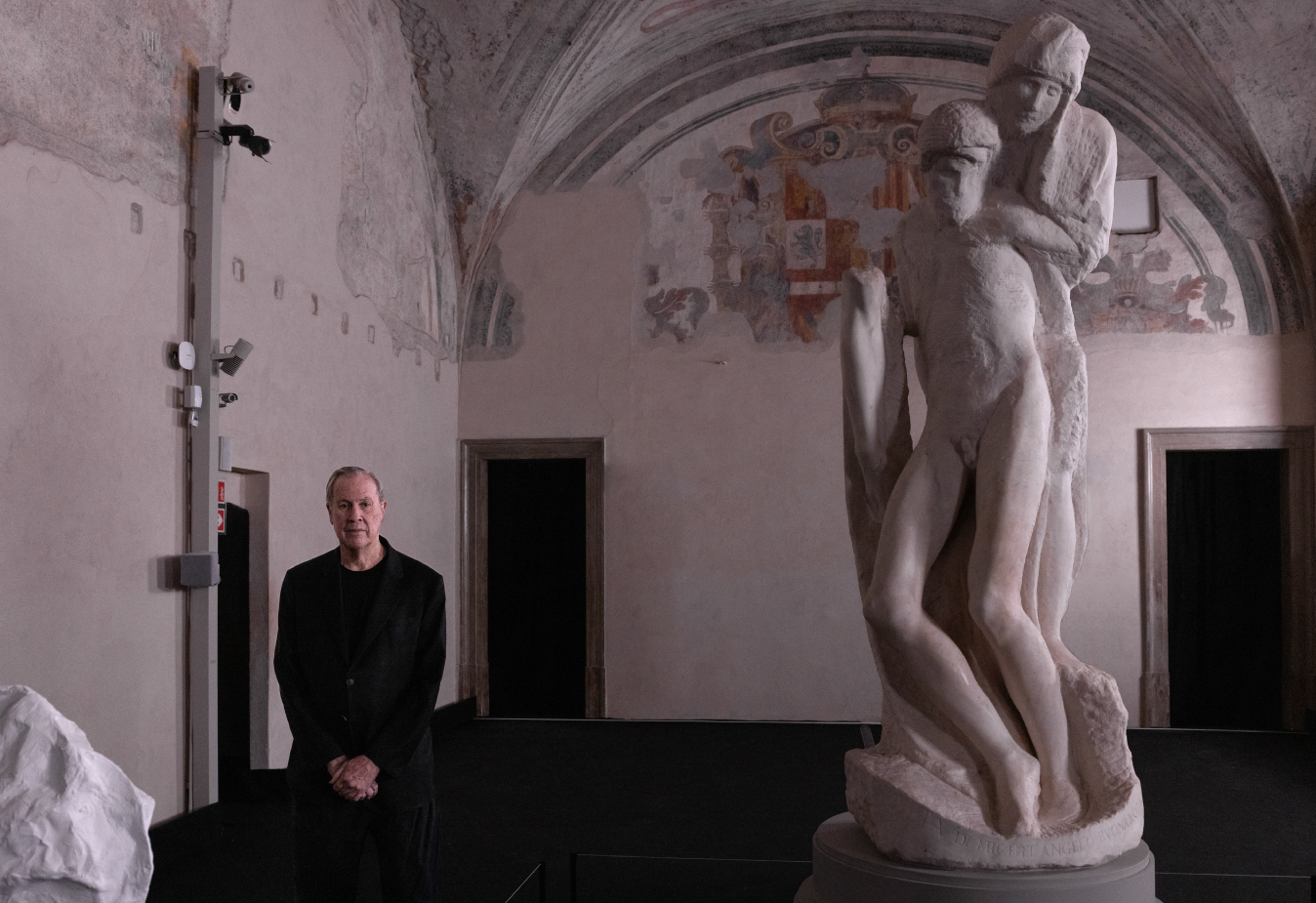
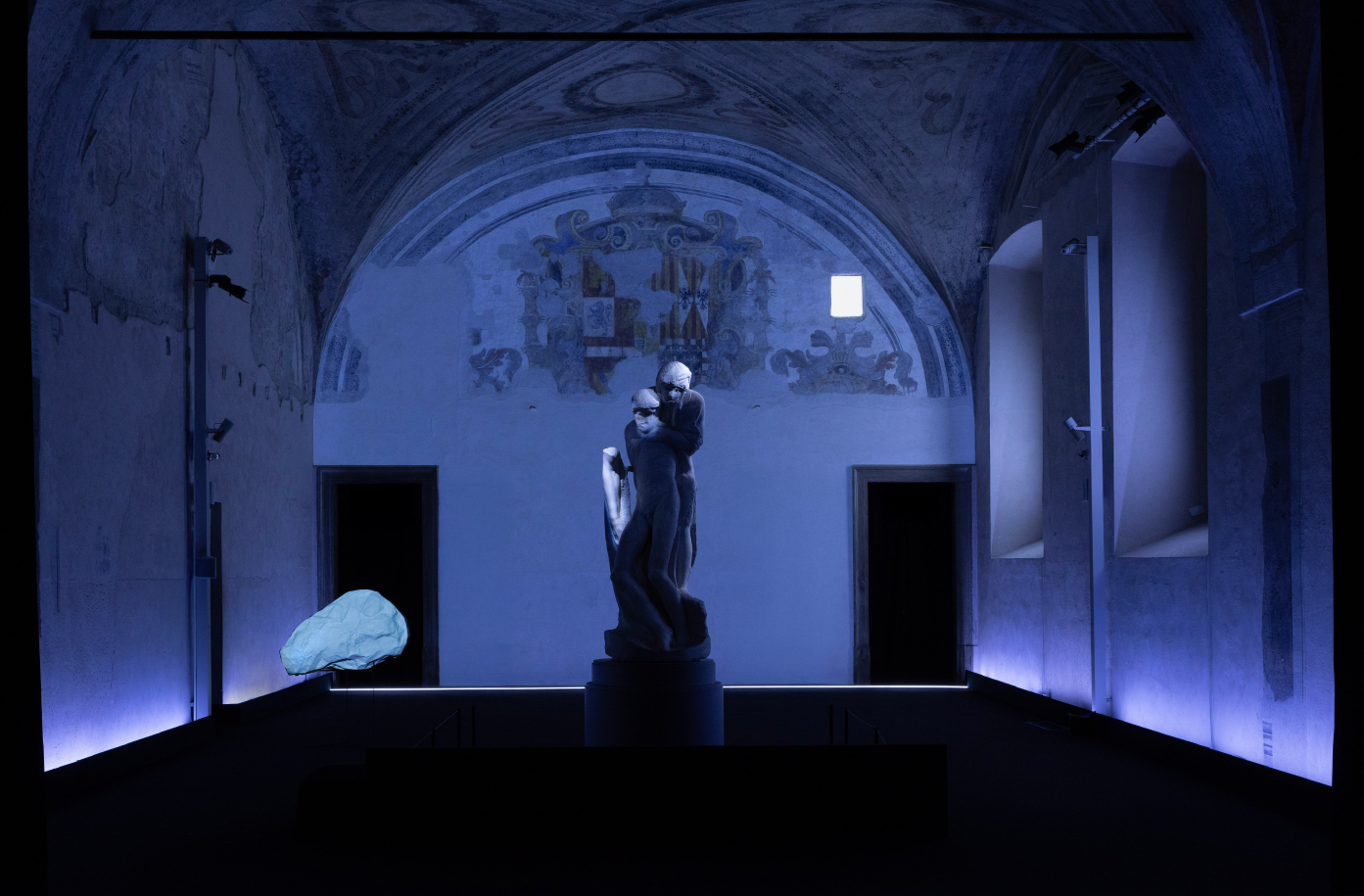
This is where Mother takes place: a darkened environment in which lights projected onto the sculpture reveal its materiality and expressiveness in a lyrical way, accompanied by a vocal and instrumental interpretation of the medieval prayer Stabat Mater by Estonian master composer Arvo Pärt.
“When I first saw the Rondanini Pietà, I sat in front of it for over an hour. Then I began to walk around it. I felt a powerful energy, an almost mystical presence,” says Robert Wilson.
Visitors can share in this meditative experience—now deepened by Wilson and Pärt’s collaboration—until 18 May. Advance booking is required: Book your visit here.