From Herzog & de Meuron’s quarry to Mario Botta’s cathedral: stone defines the most refined wineries of Bordeaux.
Bordeaux is not only a land of great wines: it is also a laboratory of contemporary architecture and natural stone. The itinerary described by Katrin Cosseta in Interni (September 30, 2025) explores precisely this dialogue, with a bicycle route through signature wineries that transform wine into a cultural and landscape experience. Over the course of the journey, from Bordeaux to the Rive Droite of the Dordogne, two wineries in particular embody, thanks to the designs of master architects, the symbiosis between stone and wine through the art of building.
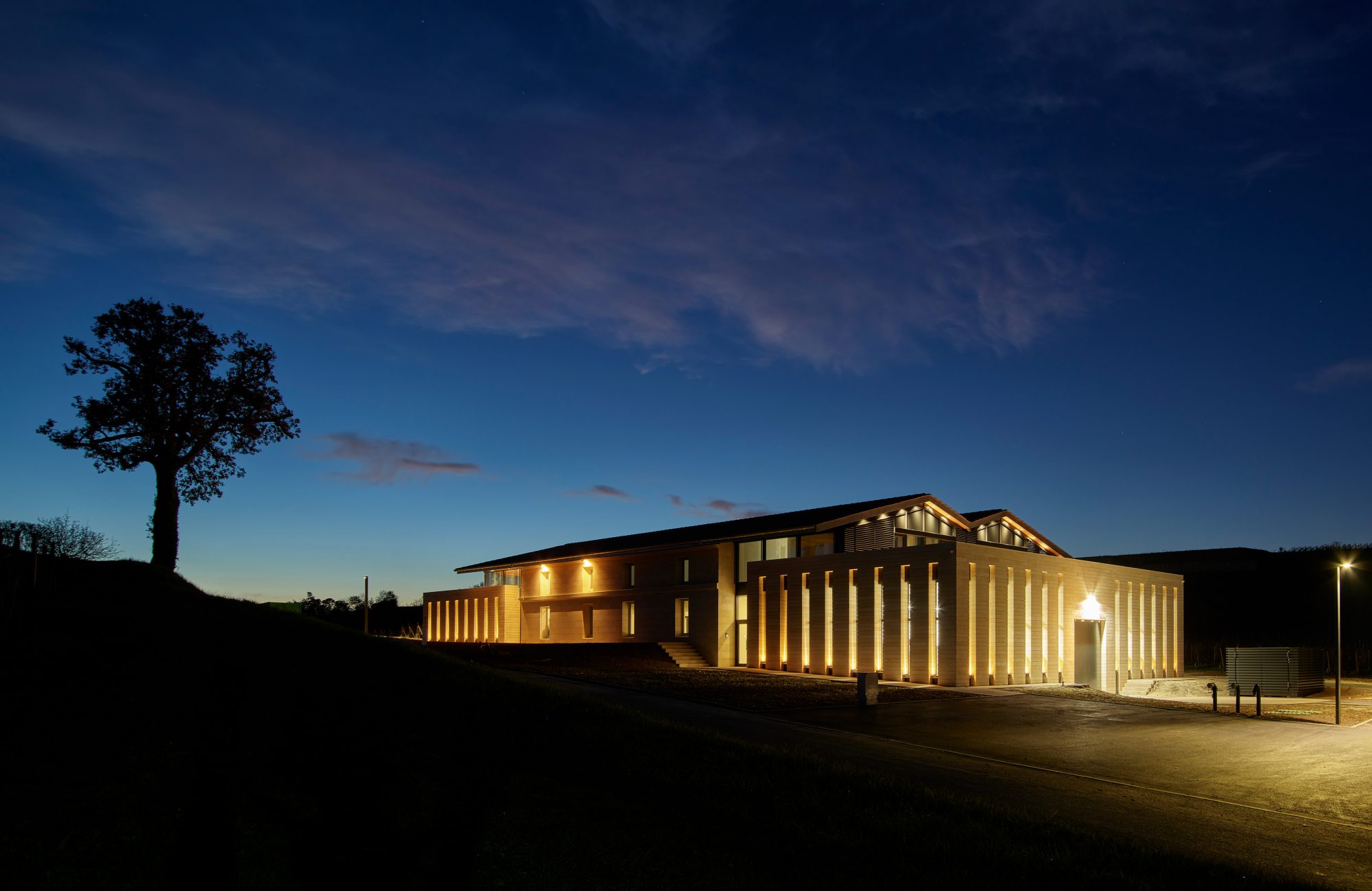
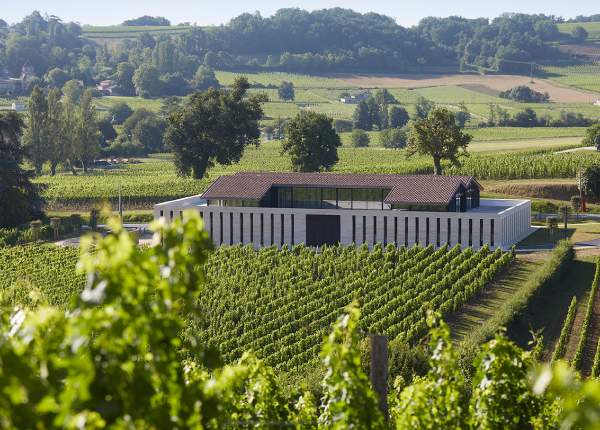
The first is Château Bélair-Monange, Premier Grand Cru Classé of Saint-Émilion, designed by Herzog & de Meuron. Here, as Interni emphasizes, the golden limestone of the local plateau becomes the protagonist: the new light-concrete cellars, slightly embedded in the ground, dialogue with the existing nineteenth-century stone house and evoke the monolithic quarries and Romanesque churches of the village. The architecture is “mineral,” according to Jacques Herzog, with roof beams that recall the furrows of Roman viticulture and textured walls that reproduce enlarged details of sixteenth-century engravings by Dürer, also replicated on the wine labels. The use of stone and concrete is not merely aesthetic: it ensures stable climatic conditions for winemaking and establishes a material dialogue between ancient and contemporary. Cosseta concludes: “The limestone minerality perceived in the glass bounces among the senses, in perfect accord with the material texture of the architecture.”
The second winery, Château Faugères, designed by Mario Botta, is described by Interni as the “Cathedral of wine.” Here, the natural yellow stone articulates the rigorous geometries of the building, while the central tower, reminiscent of a bell tower, enters into dialogue with the rolling vineyard landscape. The partially buried base houses production and barriques, while the panoramic terrace allows visitors to observe the continuity between architecture and the surrounding nature. The rigor of the design is softened by cuts and fissures that modulate the light and enhance the stone’s texture, as always in Mario Botta’s poetic language.
In both wineries, stone is not a simple cladding or reference but a meaning: in a context of extreme elegance and sensory care, the choice of such an eloquent material by some of the world’s greatest designers is a strong—and fitting—statement.