


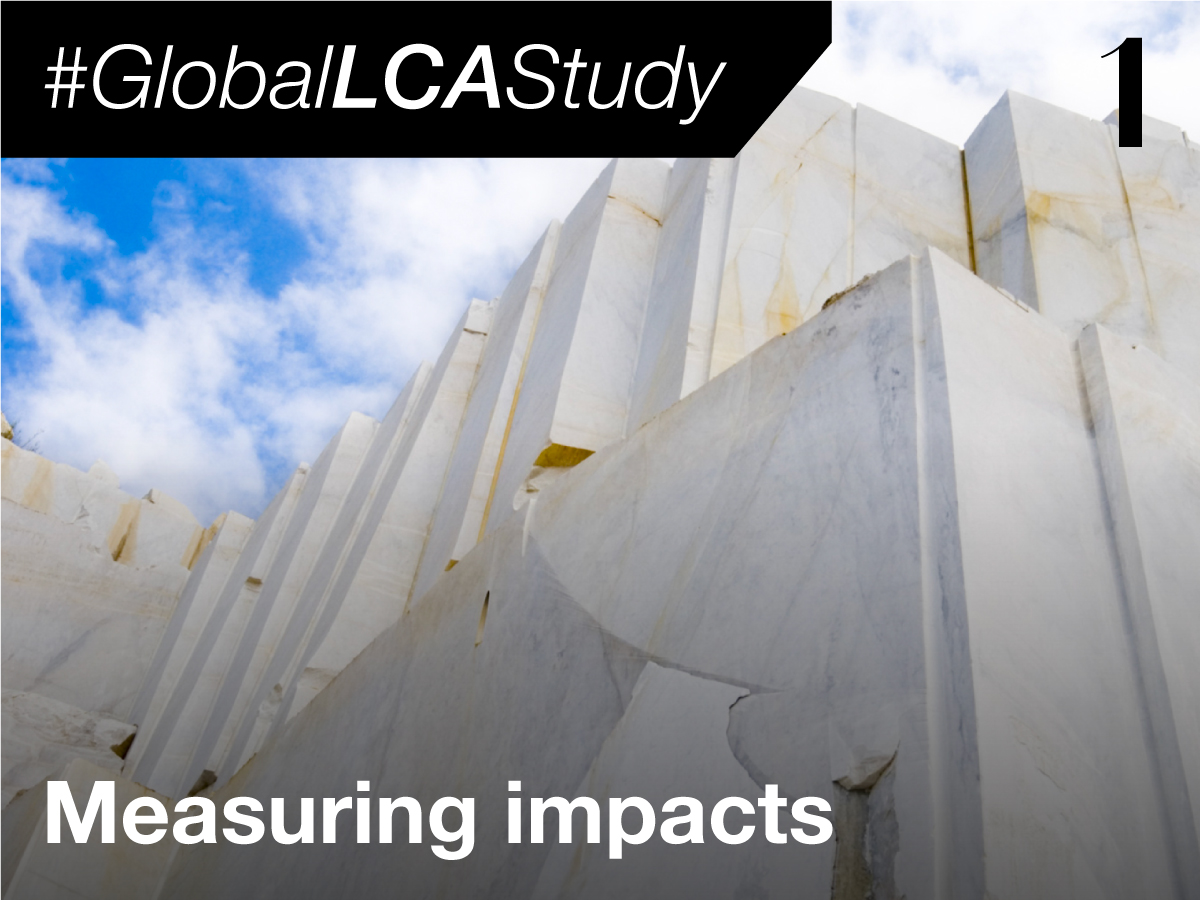
The role of the natural stone industry in the ecological and green transition is pivotal. For companies operating in this sector, aligning with sustainability objectives—particularly those linked to the Sustainable Development Goals (SDGs) outlined in the Paris Agreement and Environmental, Social, and Governance (ESG) investment criteria—has become a key competitive advantage. However, achieving meaningful progress in sustainability requires standardized, measurable, and certifiable data. As Galileo Galilei aptly stated, “Count what can be counted, measure what is measurable, and make measurable what is not.” This principle underscores the necessity of continuous improvement through precise measurement and monitoring of environmental impact over time.
The Pietra Naturale Autentica (PNA) business network, in collaboration with the Polytechnic University of Turin, has conducted an International Life Cycle Assessment (LCA) to quantify the environmental footprint of natural stone random slab production. The study assessed 20 different materials—12 quarried in Italy and 8 abroad—using the internationally recognized ISO 14040-44-compliant LCA methodology, which adheres to European Commission guidelines. This rigorous, data-driven approach, based on information collected over a one-year period from participating companies, evaluates the environmental impacts of the entire production cycle, from extraction to the surface finishing of the final product.
The LCA methodology enables the identification of key environmental impact indicators at each stage of natural stone production. The study presents results in a standardized and accessible format, expressing the carbon footprint as kg of CO₂ equivalent per square meter (kg CO₂ eq/sqm) of a 2 cm thick natural stone random slab—a functional unit commonly used for environmental assessments. This quantification allows for the detailed analysis of ecological impacts across various production phases and material types by assessing crucial environmental parameters such as energy consumption, transportation, water usage, and emissions. The results provide natural stone industry stakeholders with actionable insights to optimize processes, reduce environmental impacts, and improve overall sustainability performance.
By integrating precise environmental assessments into decision-making, the natural stone sector can enhance its commitment to sustainability while reinforcing its competitiveness in an increasingly eco-conscious market.
Focus Interview
Stefano Ghirardi, President of PNA
“LCA defines and strengthens the value chain that we must communicate to the design and construction industry.”
President Ghirardi, what role should the natural stone industry play in the transition toward a more sustainable economy?
“Our objective is to highlight the inherent sustainability of the natural stone industry and to communicate a clear message to the design and construction sectors: natural stone is not only an aesthetic choice but also a durable and environmentally responsible building material.
Natural stone aligns seamlessly with advanced green building protocols, contributing to energy efficiency and resource conservation. Its durability ensures a long lifecycle with minimal maintenance requirements, preserving its unique aesthetics and structural integrity over time.
However, sustainability must be quantifiable and certifiable. That is why PNA has undertaken this international LCA study, with the future goal of third-party certification. This initiative enables us to scientifically assess and transparently communicate the environmental footprint of natural stone random slabs, providing stakeholders with data-driven insights into its sustainability credentials.
Our next strategic milestone is obtaining the Environmental Product Declaration (EPD), further reinforcing the industry’s credibility. Conducting LCA is not merely a technical exercise—it is a responsibility. It defines and enhances the value chain that we, as an industry, must communicate to architects, developers, and stakeholders across the construction sector.
This approach is essential for an industry that comprises over 3,200 companies in Italy, employs approximately 34,000 professionals, and generated a revenue of €4.5 billion in 2023. Of this, €3.2 billion originates from exports, accounting for 71.2% of total production, with a trade surplus exceeding €2.7 billion.
The Italian natural stone industry is a globally recognized leader. Our responsibility now is to establish it as a model of environmental sustainability.”