


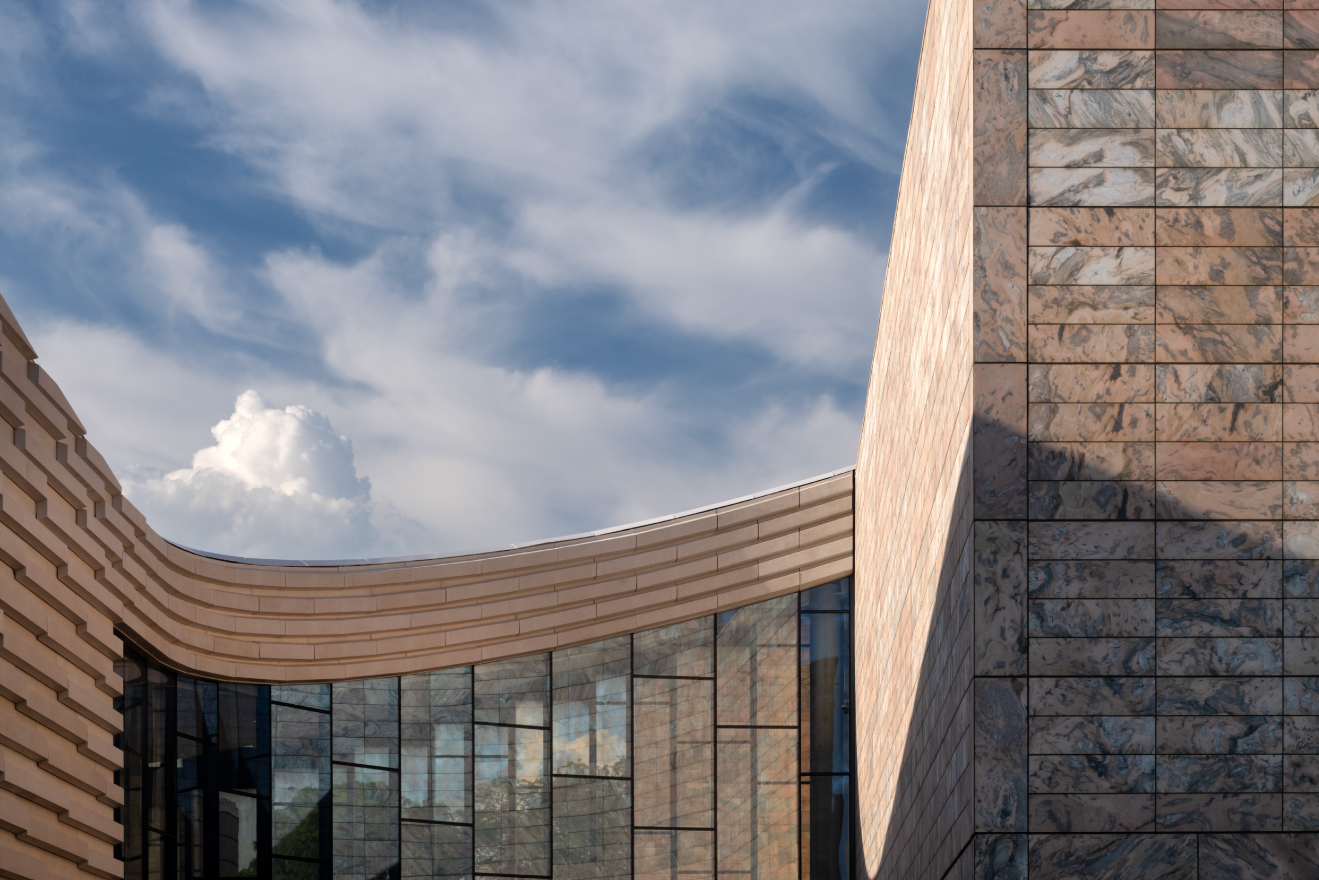
The fine and distinctive material unites the Norwegian studio’s new light and dynamic pavilion with the monumental historic building and Norman Foster’s minimalist addition
The renowned Norwegian studio Snøhetta and Alley Poyner Macchietto Architecture have completed the new addition to Nebraska’s largest art museum. The curved form and glass heart stand in stark contrast to the massive character of the historic Art Deco core from 1931 and Norman Foster’s 1994 addition, but the three structures share the presence of pink Etowah Fleuri Georgia marble on their facades. This marble was, in fact, incorporated into the panels of the pavilion completed this year.
On September 10, 2024, the architectural intervention by Snøhetta was inaugurated at Nebraska’s largest art museum. In collaboration with local firm Alley Poyner Macchietto Architecture, they designed a renovation and expansion of the Joslyn Art Museum in Omaha, adding a new large pavilion of 3,900 square meters.
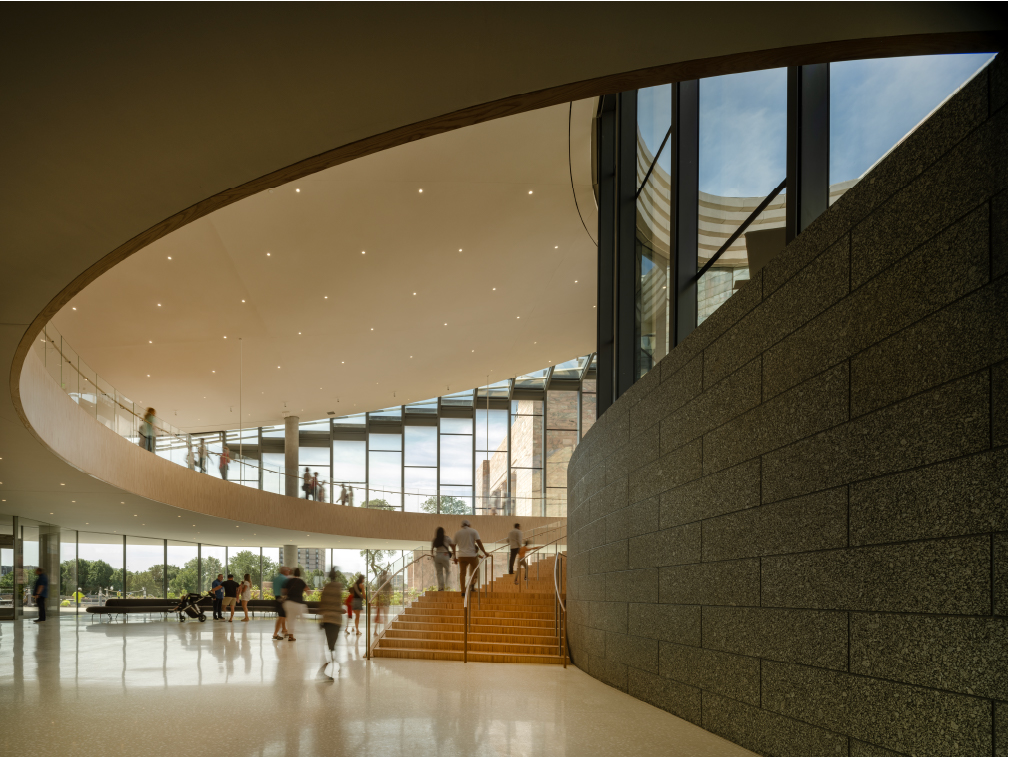
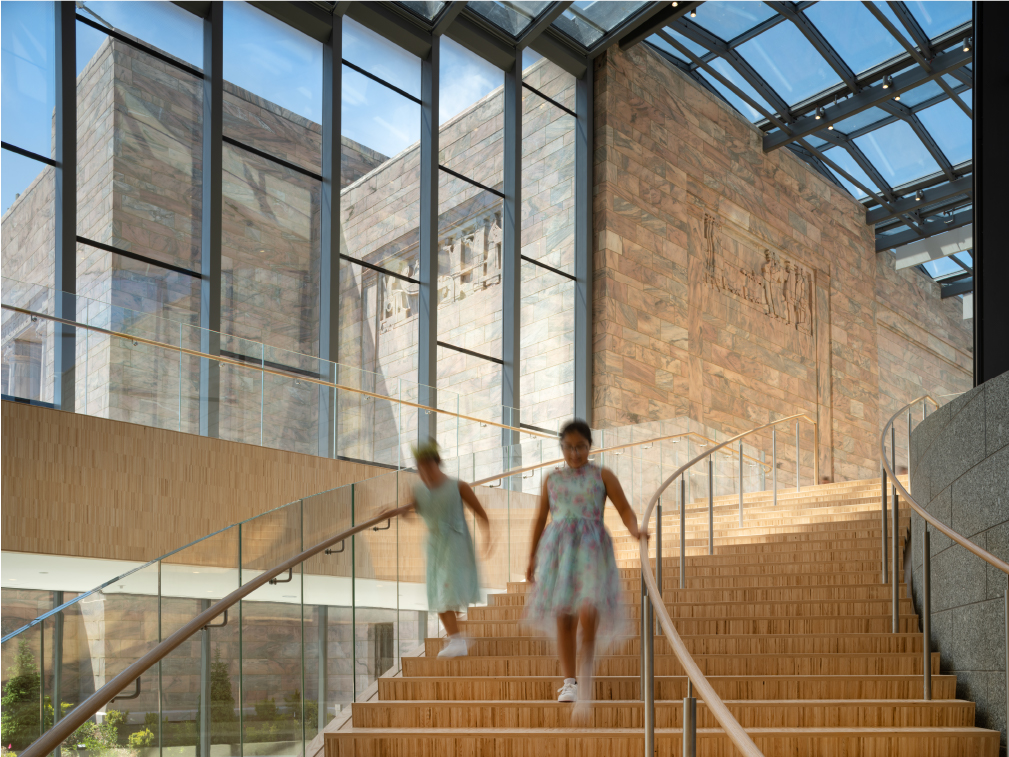
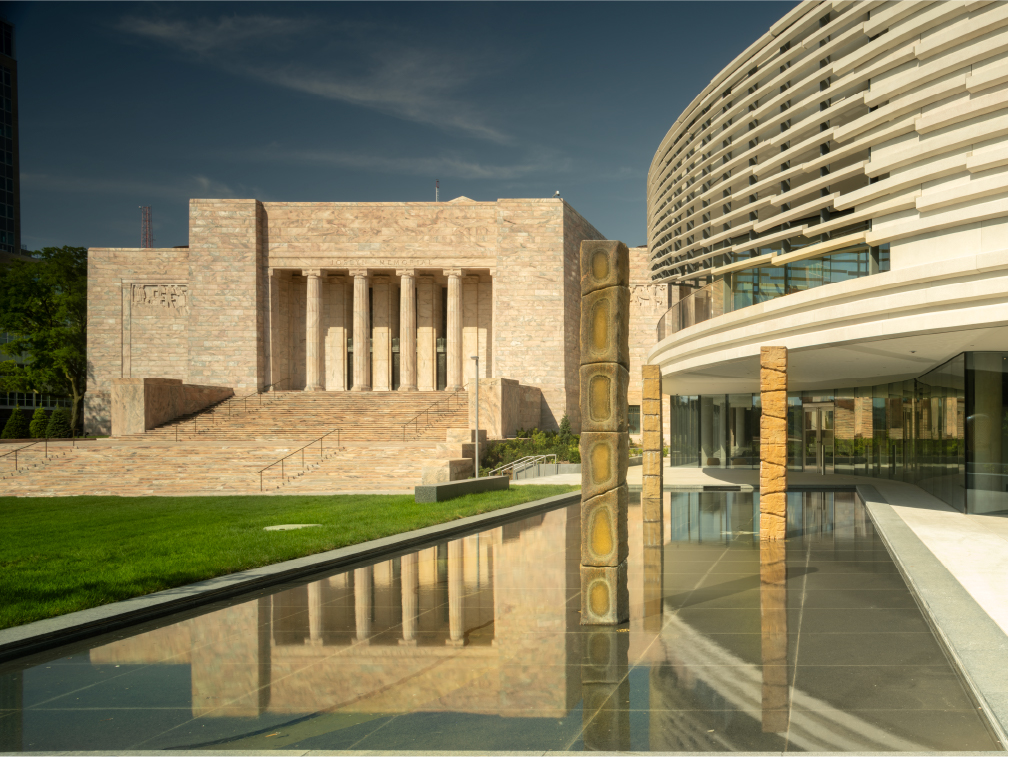
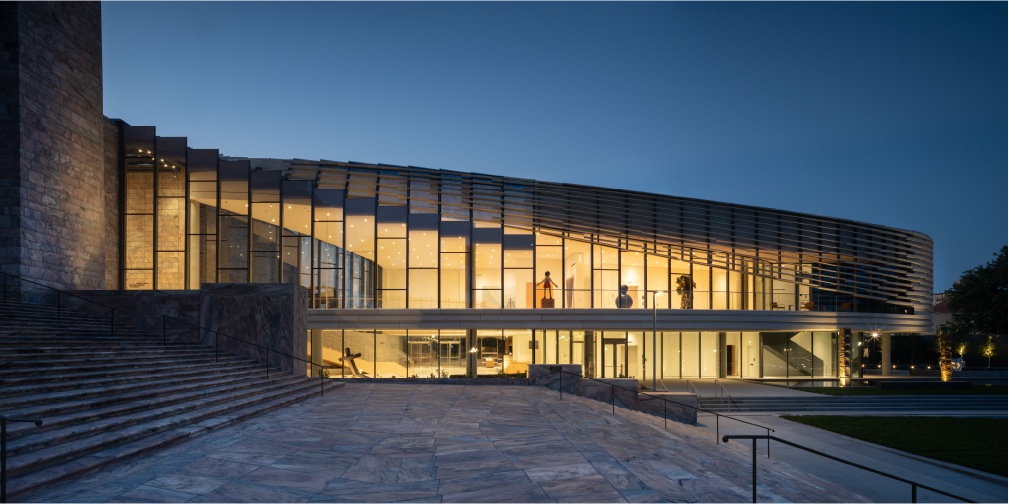
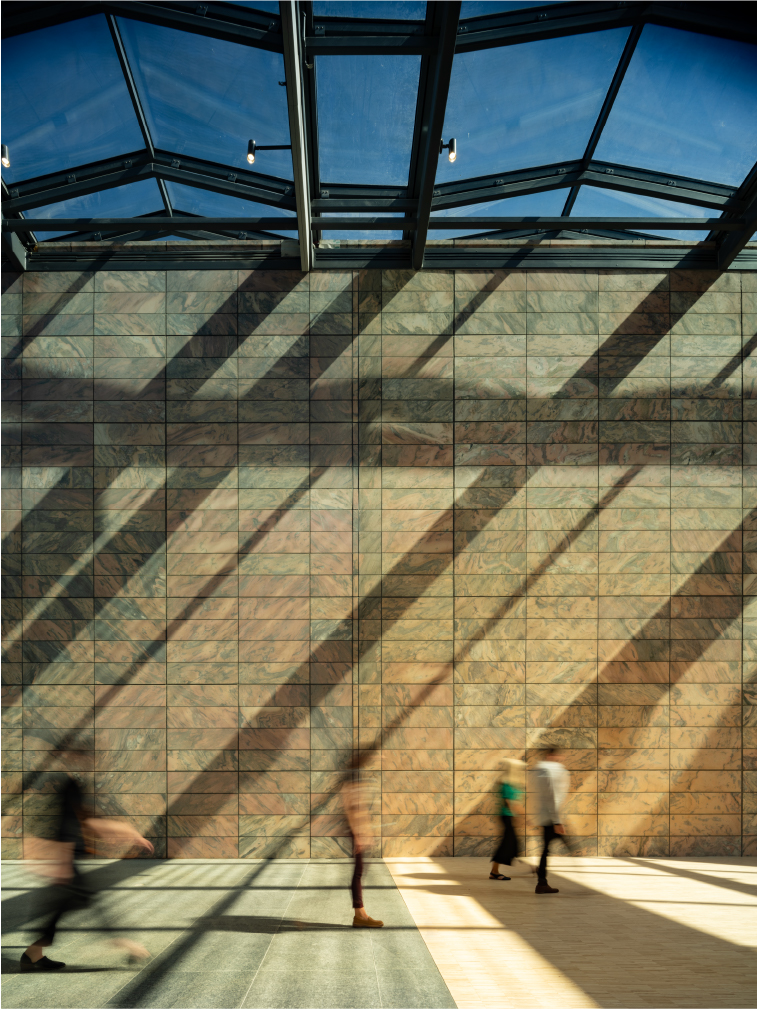
The museum's historic core, an imposing Art Deco building completed in 1931 by Nebraska architects John and Alan McDonald, had already undergone an addition: in 1994, a new wing designed by Lord Norman Foster nearly doubled the museum's space. While Foster's addition echoed the proportions and solid, massive character of the original building, Snøhetta's design decisively diverges from the preexisting structure. The new addition features a curved, dynamic shape, created by prefabricated concrete panels that reveal a glass core, lightening the overall effect. "While the existing monolithic buildings maintain a solid, grounded presence, our new addition 'floats' above two granite walls of the garden, with a transparent first floor that encloses a new atrium, the museum shop, and a multifunctional community space," the team explained, adding that "the lightness of the suspended addition is a tribute to the impressive cloud formations that cover the Great Plains."
The unifying element across the three architectures, products of different historical contexts and intentions but still part of the same entity, is the pink Etowah Fleuri Georgia marble. Over the course of a century, the same quarry has provided this unique material, which covers the entire surface of the historic museum, whose monumental facade with a stone colonnade references Egyptian temples, as well as Foster's wing, a pure volume that seems to have been generated from the original thanks to the identity of the material, and Snøhetta's contemporary pavilion. The Norwegian studio, while aiming to convey lightness, deemed it essential to include the pink marble, which has now become a distinctive feature of the Joslyn Art Museum. The solution they adopted was to enrich the precast panels of the facade with vibrant marble inserts, adding color and value to the exterior. Additionally, the dark granite base on which the glass ground floor rests ensures continuity with the monumental character of the entire complex.
To find out more visit https://www.snohetta.com/projects/joslyn-art-museum-expansion
Photo Credit: Nic Lehoux