


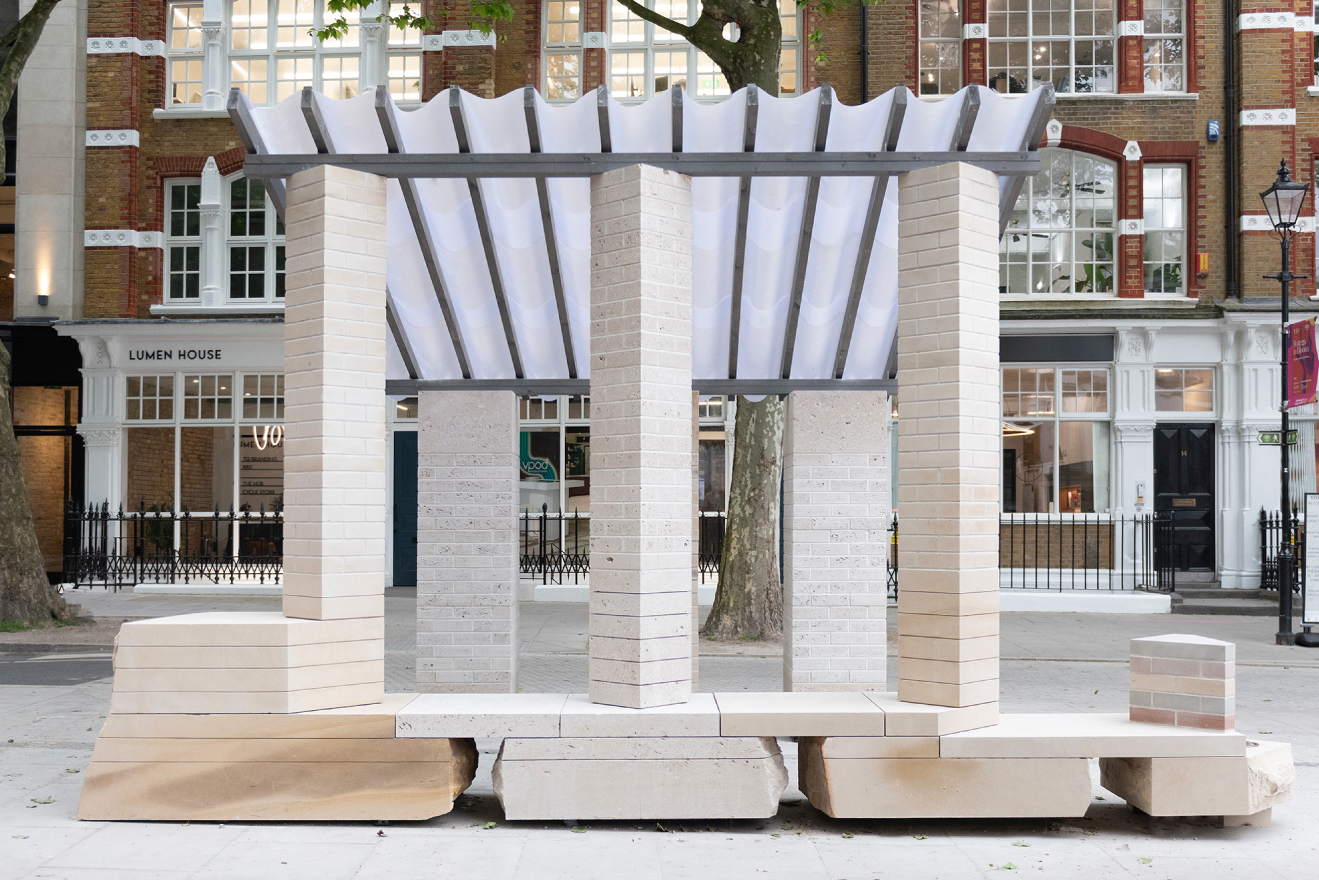
A simple installation to represent the ecological and formal potential of stone bricks
There is a growing awareness that natural stone is, by its very nature, a more sustainable building material than many alternatives. This is primarily because it doesn’t need to be manufactured, only extracted and processed, a substantial difference when calculating carbon footprint. This is the message behind the installation Brick from a Stone, created in London for the Clerkenwell Design Week 2024 by the London-based studio Artefact, commissioned by the British stone suppliers Albion Stone and Hutton Stone.
The project is simple and direct: six columns, each three meters tall, supporting a canopy and resting on a base of rough stone blocks and stone slabs that function as benches—with an incorporated bowl for dogs, referencing the traditional horse watering troughs common in England. The installation aims to recall English construction traditions, particularly brick masonry buildings: hence, the columns are made of bricks, 144 per column. However, the unique feature of these bricks, which gives the project its name, is that they are stone bricks: Portland stone produced by Albion and sandstone from Hutton.
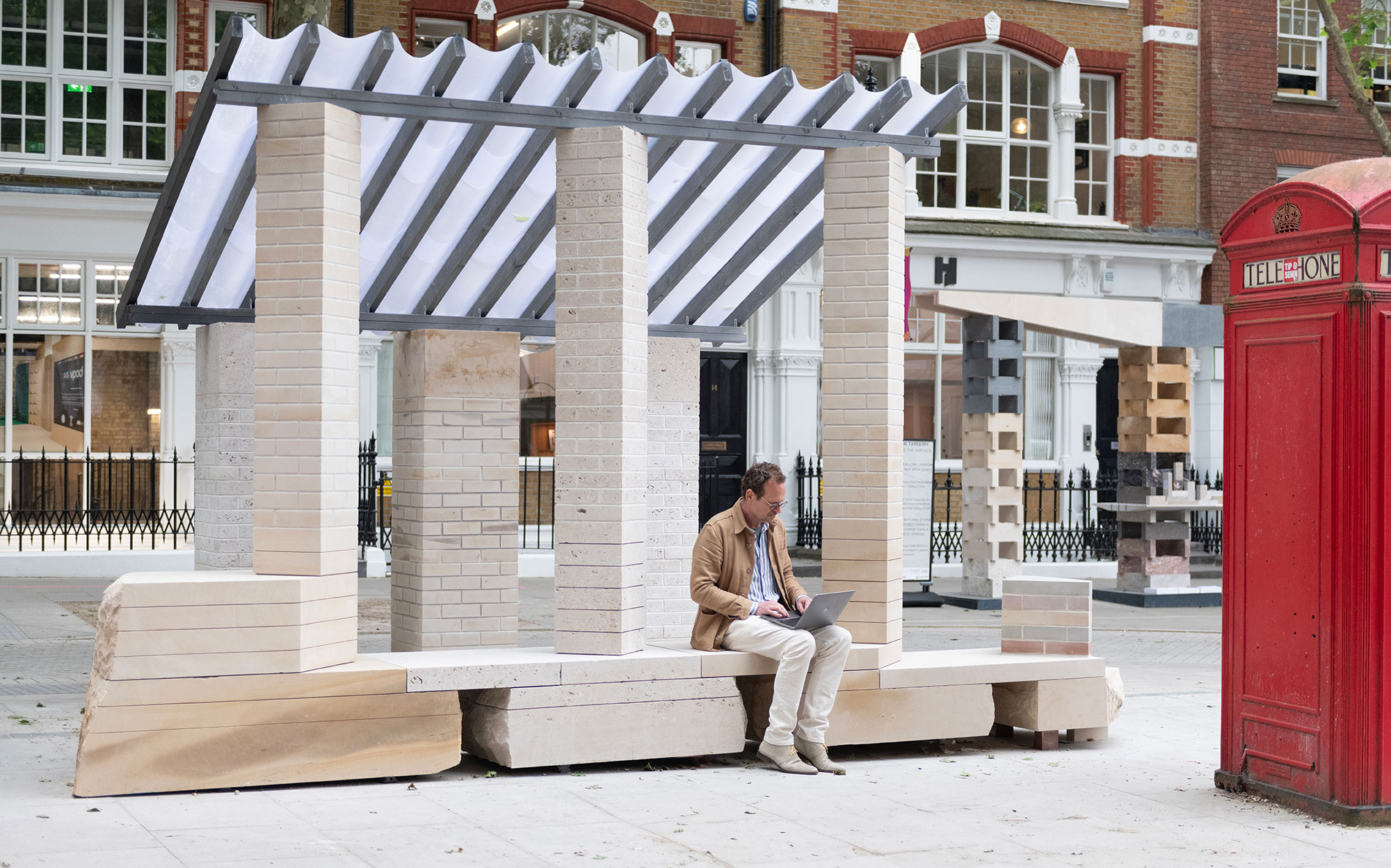
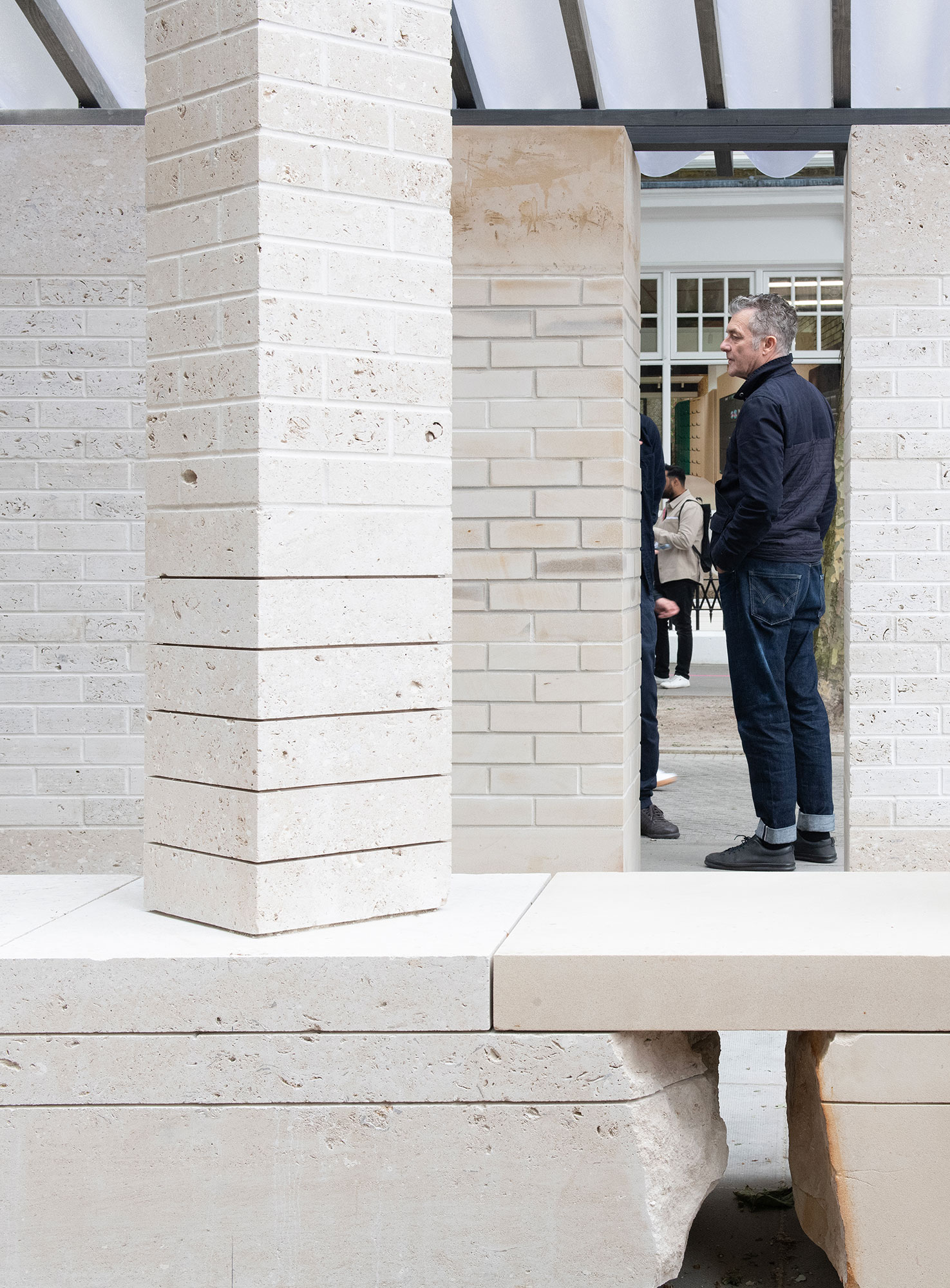


The installation is much more than a pleasing utilitarian and aesthetic intervention; it is a representation of the process by which high-quality stone bricks are made from unloved stone blocks—residues from other processes or units with imperfections. The Guardian states that it is “an installation that could shake the foundations of the construction industry.” Marcus Paine, managing director of Hutton Stone, explains, “We are transforming our ever-growing surplus of what is called imperfect stone into a low-carbon building material.” “Since reducing embodied carbon in buildings has become a priority, we expect architects to be attracted to the sustainability credentials of these stone bricks,” adds Michael Poultney, managing director of Albion Stone. Daniel Marmot, director of Artefact, concludes, “The work hints at the potential to create a new low-carbon vernacular for masonry buildings in the UK.”
The carbon footprint of the pavilion is equivalent to about a third of that of an average laptop, or less than a quarter of what it would have been if it had been built with traditional fired clay bricks. The design was accompanied by quantitative sustainability studies: Brick from a Stone was built with 864 stone bricks, resulting in a total carbon footprint of 142.56 kg CO2e; with fired clay bricks, the footprint would have been about 613.44 kg CO2e. Their carbon footprint is estimated at 42.6 kg CO2e per m², equivalent to five Portland stone bricks or 3.5 sandstone bricks. All this, with the added aesthetic and symbolic value of natural stone, which cannot be quantified.
To find out more visit https://artefact-studio.com/Brick-from-a-Stone
Photo Credit: Ivan Jones